

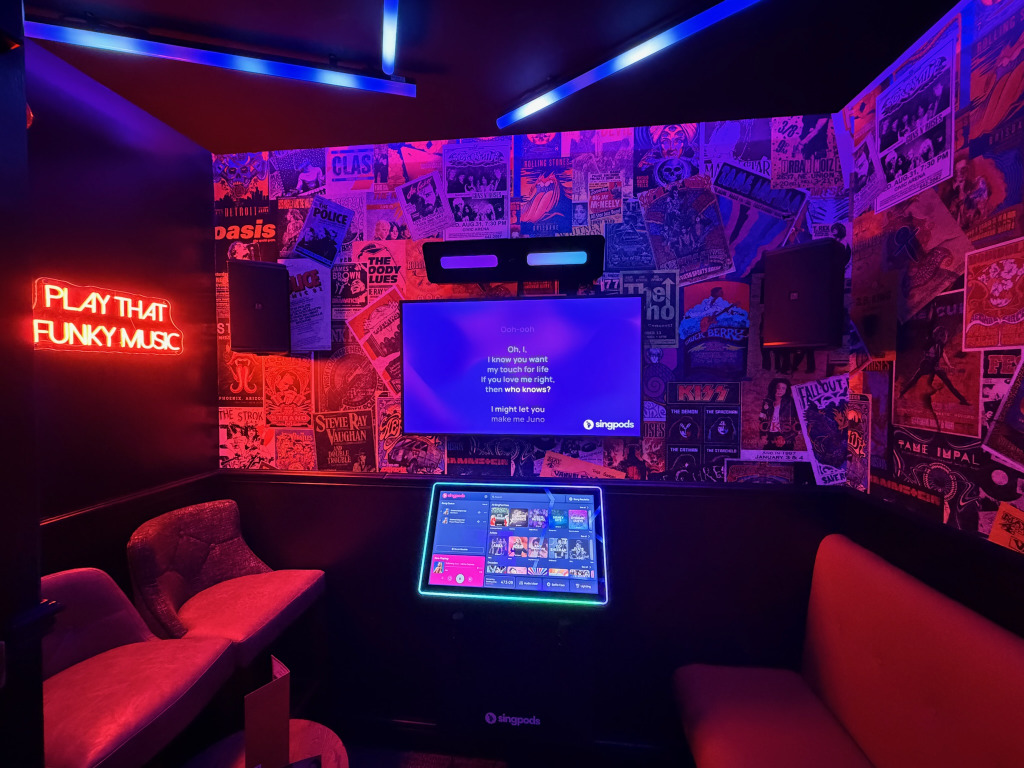
Reading Festival brought around 100,000 festivalgoers together over the bank holiday weekend, creating a huge audience for music, brands, food, drink, and entertainment. For SingPods founder Steve Ware, it also provided an opportunity to observe how people were choosing to spend their time away from the stages. One contrast stood out. Traditional branded bars appeared comparatively quiet, while stands giving people something to actively do attracted queues and consistent interest.
SingPods experienced that demand directly while powering the custom Pepsi MAX Karaoke booth throughout the weekend. Rather than simply presenting a brand message, the activation invited festivalgoers to step inside, choose a song, perform with friends, and become part of the experience.
It was a snapshot of a potentially important change in festival behaviour. Drinking remains part of the festival experience for many people, but participation can provide another powerful reason for audiences to engage with a brand or spend time in a particular part of the site.
For hospitality and festival operators, the observation raises an important question. If younger audiences increasingly want something to do as well as something to consume, should entertainment play a larger role in the way commercial spaces are designed?
Bars have traditionally played a significant role within major festival sites. They generate revenue while also providing natural gathering points between performances. Steve's observations at Reading suggested that the busiest commercial spaces were not necessarily those built around drinks. Activations offering participation appeared to generate particularly visible interest, with festivalgoers prepared to queue for an experience they could actively join.
That does not mean audiences have stopped drinking or that traditional food and beverage offers are becoming irrelevant. Instead, it suggests there may be value in giving people additional reasons to spend time within commercial areas.
Interactive entertainment changes the relationship between the audience and the space. Instead of arriving, making a purchase, and moving on, visitors have an activity that encourages them to remain engaged.
The social element is equally important. Festivals are shared experiences, and activities that groups can enjoy together naturally fit within that environment. Singing, playing, competing, or creating something gives friends another memorable moment between the performances they came to see.
There is also a digital dimension. Festivalgoers frequently capture the moments they enjoy and share them with friends or through social platforms. An interactive activation can therefore create something worth documenting rather than simply providing another branded backdrop. This gives the experience potential value beyond the immediate interaction. The participant gets a memory from the festival, while the brand becomes part of content that can continue to be shared after the moment itself has ended.
The Pepsi MAX Karaoke booth provided a practical example of what participation can look like within a large festival environment. Powered by SingPods, the custom activation gave visitors a dedicated place to sing during the weekend. The acoustically treated environment helped separate the karaoke experience from the noise and activity taking place across the surrounding festival site.
That separation matters at an event where music, crowds, announcements, and other activations are operating simultaneously. Rather than trying to create karaoke in an open environment, the booth gave participants their own space to perform. Using festival karaoke pods in this way also creates a clear point of interaction. Visitors can immediately understand what the activation offers and decide whether they want to take part.
For groups of friends, festival karaoke pods provide a familiar activity without requiring specialist knowledge or skill. People can choose a song they know, step inside together, and create their own moment within the wider festival.
That accessibility is particularly relevant when considering Gen Z festival activities. Steve's observations suggest that younger festivalgoers were responding positively to opportunities for active participation, rather than only spending their time around more traditional commercial spaces.
The Reading activation also demonstrated how an established entertainment format can be adapted for a brand. Pepsi MAX was not simply associated with a physical booth. The brand became part of something attendees were actively doing. That distinction can make an activation feel less like advertising and more like part of the festival itself.
The observations from Reading Festival are also relevant beyond outdoor music events. Bars, competitive socialising venues, entertainment centres, and other hospitality businesses face a similar challenge. They need to give customers reasons to spend time in the venue rather than simply arrive, make a purchase, and leave.
Interactive entertainment can add another layer to that experience. Instead of treating food and drink as the only reasons to remain onsite, operators can introduce activities that encourage groups to continue socialising.
Karaoke is one example because it can occupy a defined area while creating a dedicated group activity. Guests can incorporate singing into a wider visit that also includes drinks, food, or other entertainment. For operators, this changes how individual areas of a venue can contribute to the overall guest experience. Space that might otherwise have limited commercial use can potentially become somewhere customers actively choose to spend time.
A self contained format also provides flexibility. Operators can introduce an entertainment concept without necessarily designing an entire venue around it, allowing karaoke to complement an existing hospitality or leisure offer. The objective is not simply to keep people onsite for as long as possible. The experience needs to give them a genuine reason to stay.
Reading Festival provided a useful example of this distinction. People appeared willing to queue where participation itself offered something memorable, suggesting that the quality of the interaction can matter as much as the physical space dedicated to it.
A festival provides a concentrated environment for observing audience behaviour, but the broader opportunity is understanding whether those behaviours translate into everyday leisure choices. The Reading Festival experience suggests that participation deserves consideration. If audiences respond positively to Gen Z festival activities that allow them to sing, play, compete, or create content together, those same principles can inform permanent hospitality and entertainment environments.
For brands, interactive formats can turn a temporary activation into something people actively remember taking part in. For venues, similar activities can create another reason for groups to visit and add another dimension to an existing night out. The Pepsi MAX Karaoke booth demonstrated this in a temporary festival setting. SingPods can also be integrated into permanent venues where karaoke becomes part of the regular entertainment mix.
What stood out to Steve at Reading was ultimately simple. In a festival filled with places to buy drinks, the spaces giving people something to actively do were attracting attention. That observation does not mean drinking is disappearing from festival culture. It does suggest that participation is becoming an increasingly important part of what audiences expect from their time at an event.
For festival organisers, hospitality operators, and brands, creating more opportunities to participate could therefore become an important part of designing spaces that younger audiences genuinely want to engage with. Our karaoke pods create an additional revenue stream, as well as increase dwell time, for existing venues. Add instant karaoke in any space! Contact us now for more information.
